Start with telemetry
An observation needs context before it becomes a candidate signal.
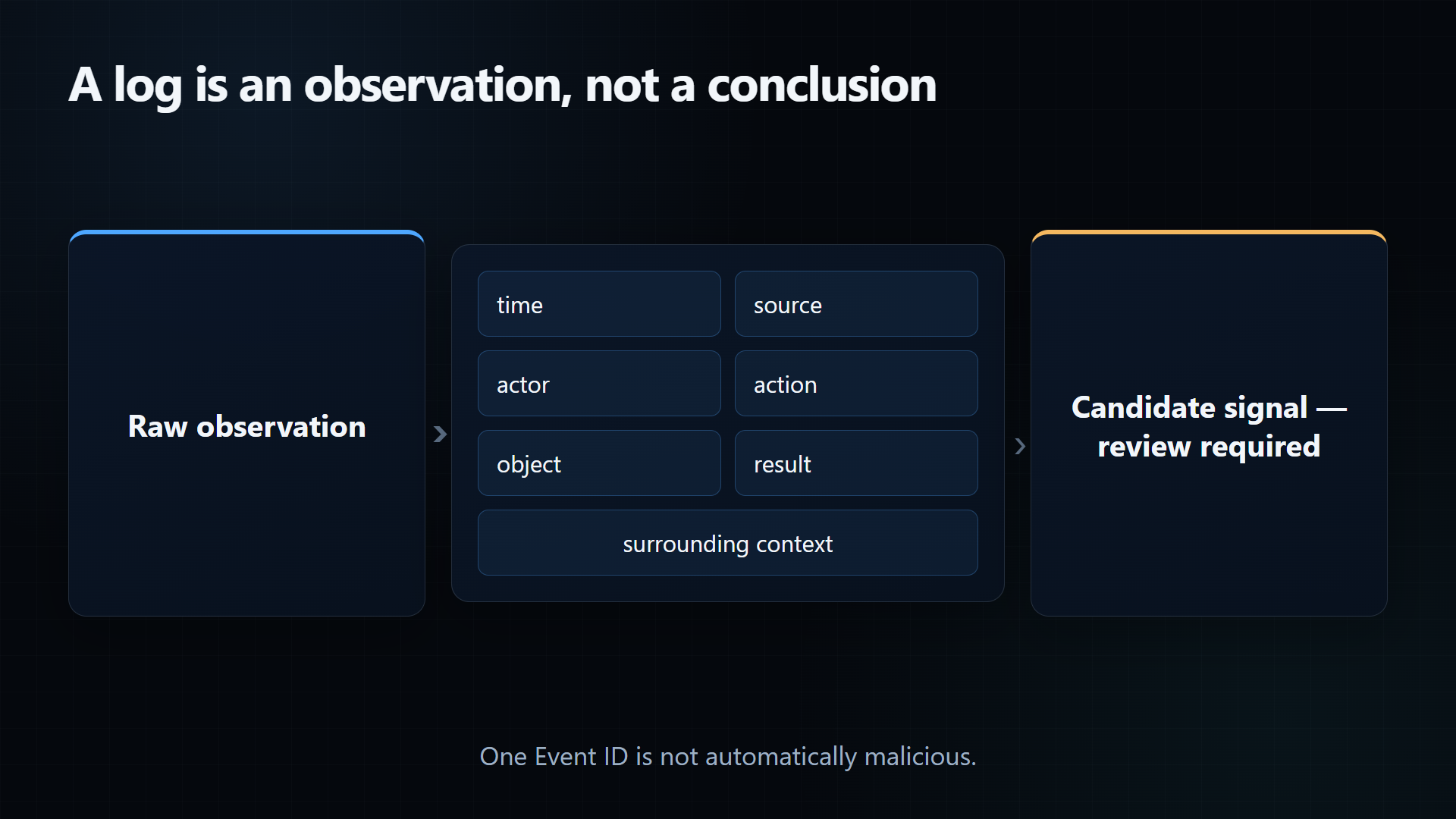
Time, source, actor, action, object, result, and surrounding context make an event useful. A match is still a review prompt—not an incident conclusion.
Podcast field guide
A practical SOC workflow for beginners.
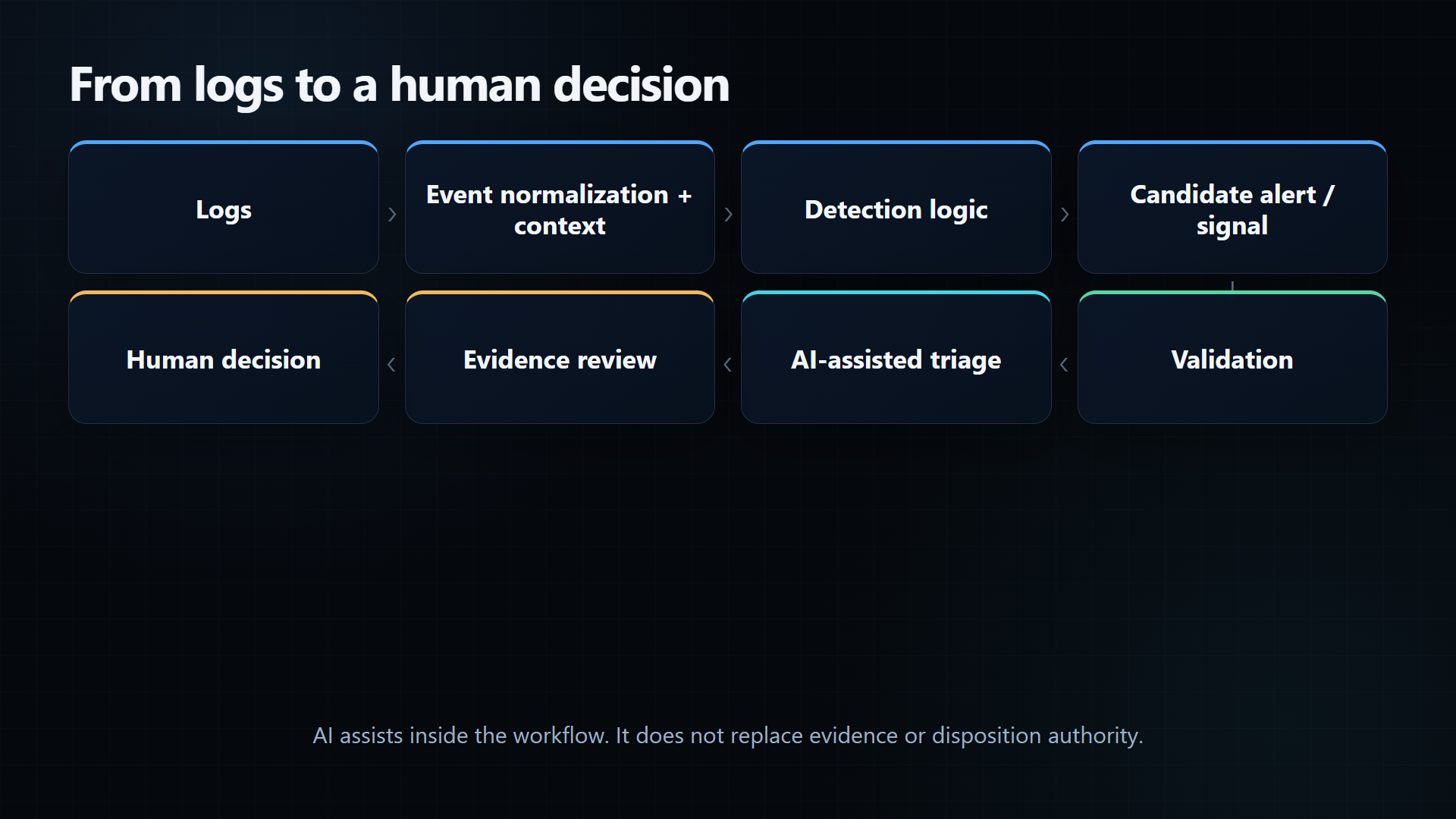
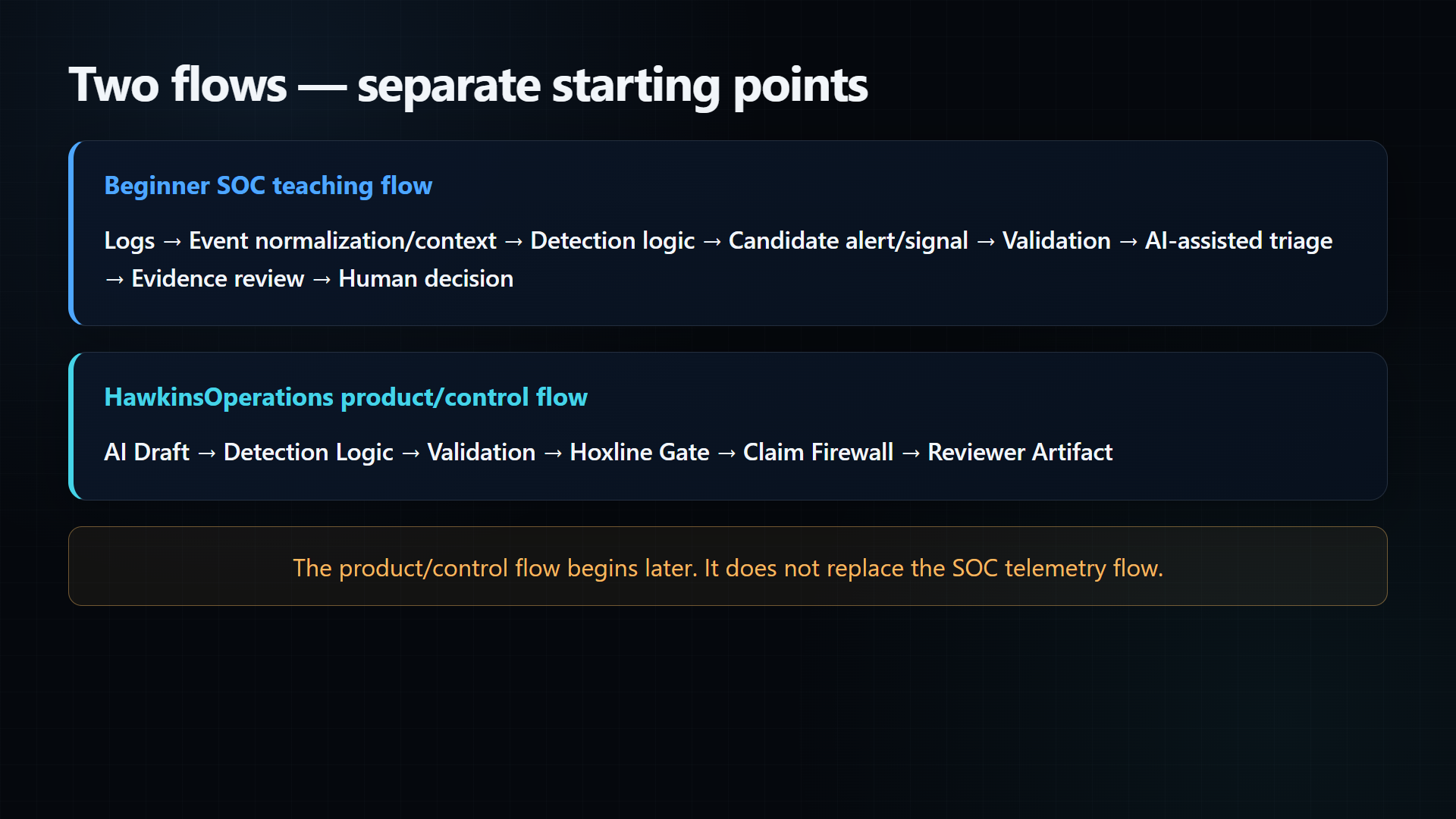
Follow one clean chain from a recorded observation to a human decision. Each step keeps its own job: context gives logs meaning, detection logic creates a candidate signal, controlled fixtures test behavior, AI assists triage, evidence stays visible, and a human owns disposition.
Beginner SOC teaching flow
The workflow begins before AI enters. Validation remains separate from triage, and evidence review remains separate from the final human decision.
Start with telemetry
Time, source, actor, action, object, result, and surrounding context make an event useful. A match is still a review prompt—not an incident conclusion.
Test in two directions
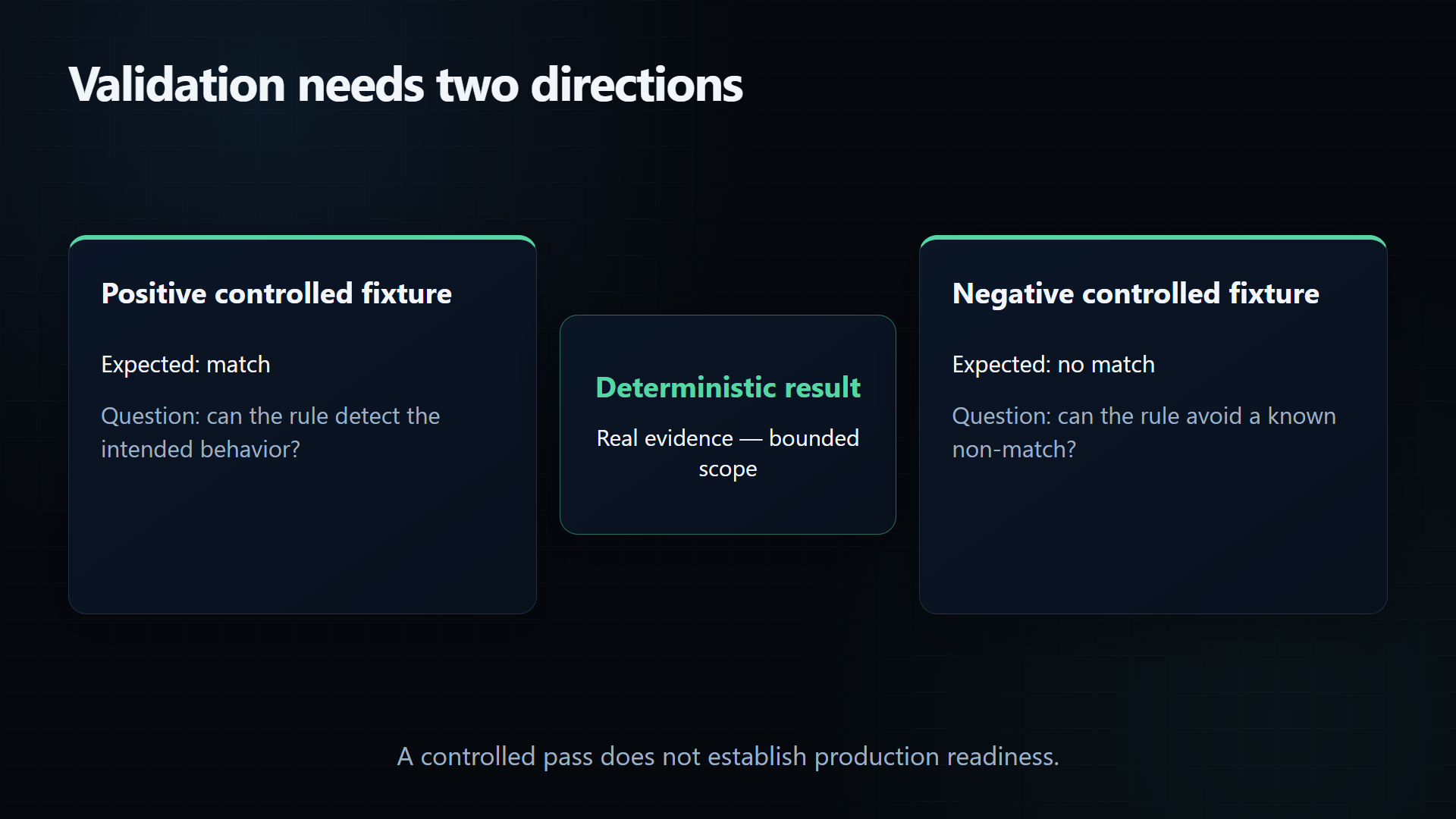
A positive fixture asks whether intended behavior matches. A negative fixture asks whether a known non-match stays quiet. The result is real evidence inside a bounded scope.
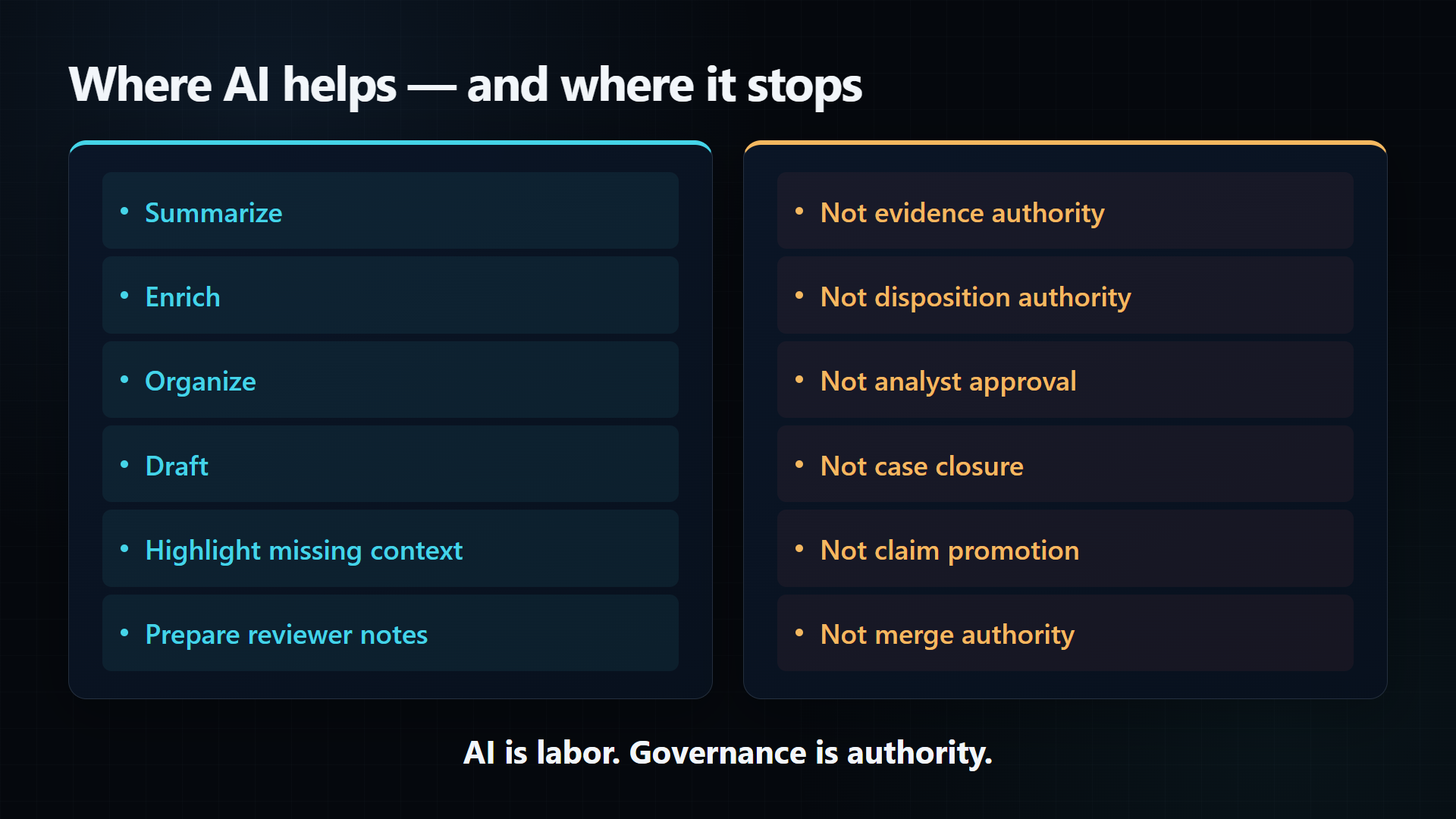
Keep authority explicit
Summaries, enrichment, organization, drafts, and reviewer notes can move faster. Evidence, disposition, approval, case closure, claim promotion, and merge authority remain outside the AI role.
Separate starting points
The SOC flow begins with telemetry. The HawkinsOperations product/control flow begins later, when AI-assisted work enters a governed review path.
A small controlled starting point
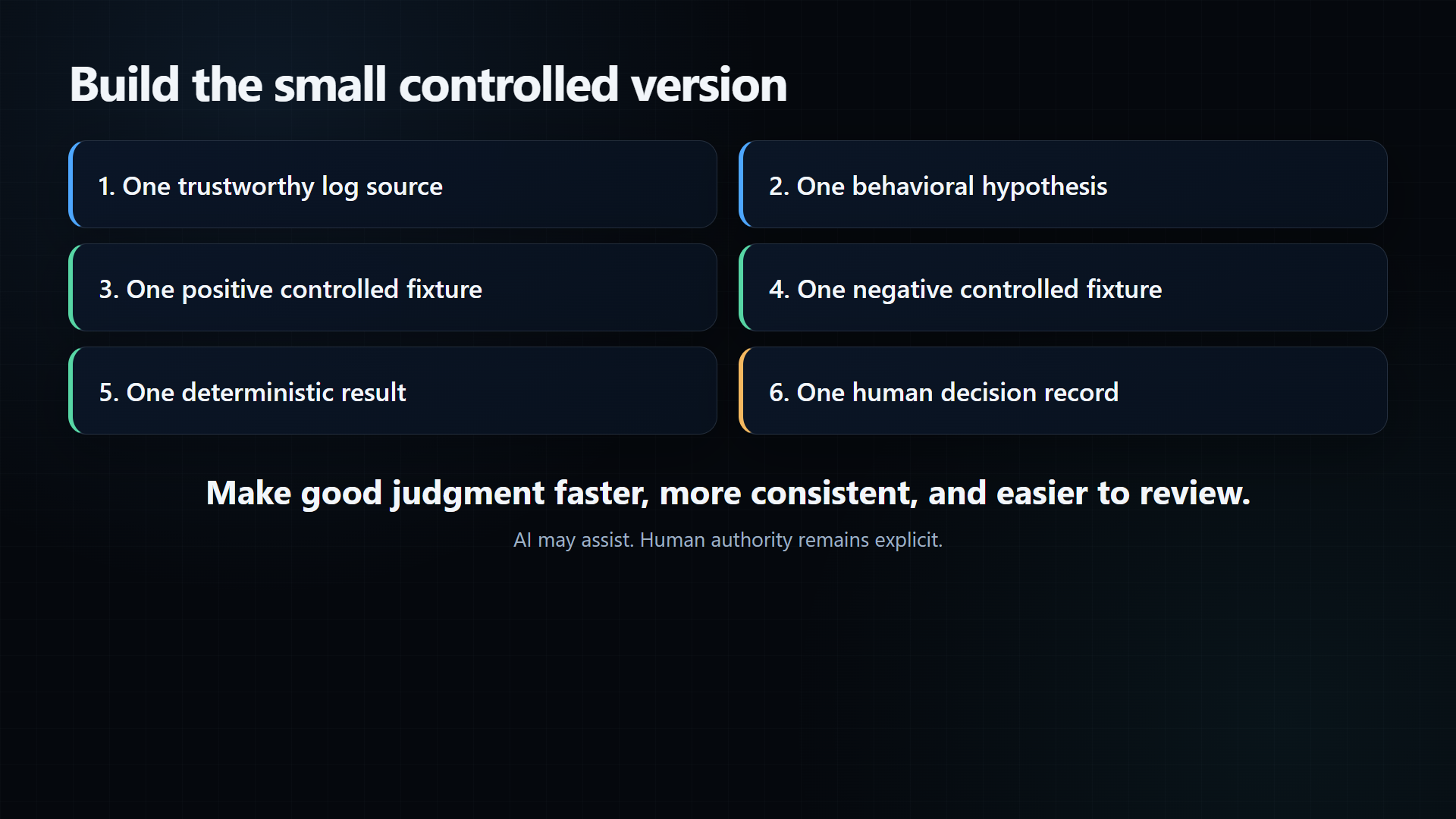
Start with one trustworthy source, one hypothesis, two controlled fixtures, one deterministic result, and one human decision record. That is enough to learn the workflow without pretending the system is production evidence.